
Places to watch · Whangaparāoa
Birdwatching
in Te Hāruhi
A slow look at the shore, bush and birdlife of Shakespear Open Sanctuary.
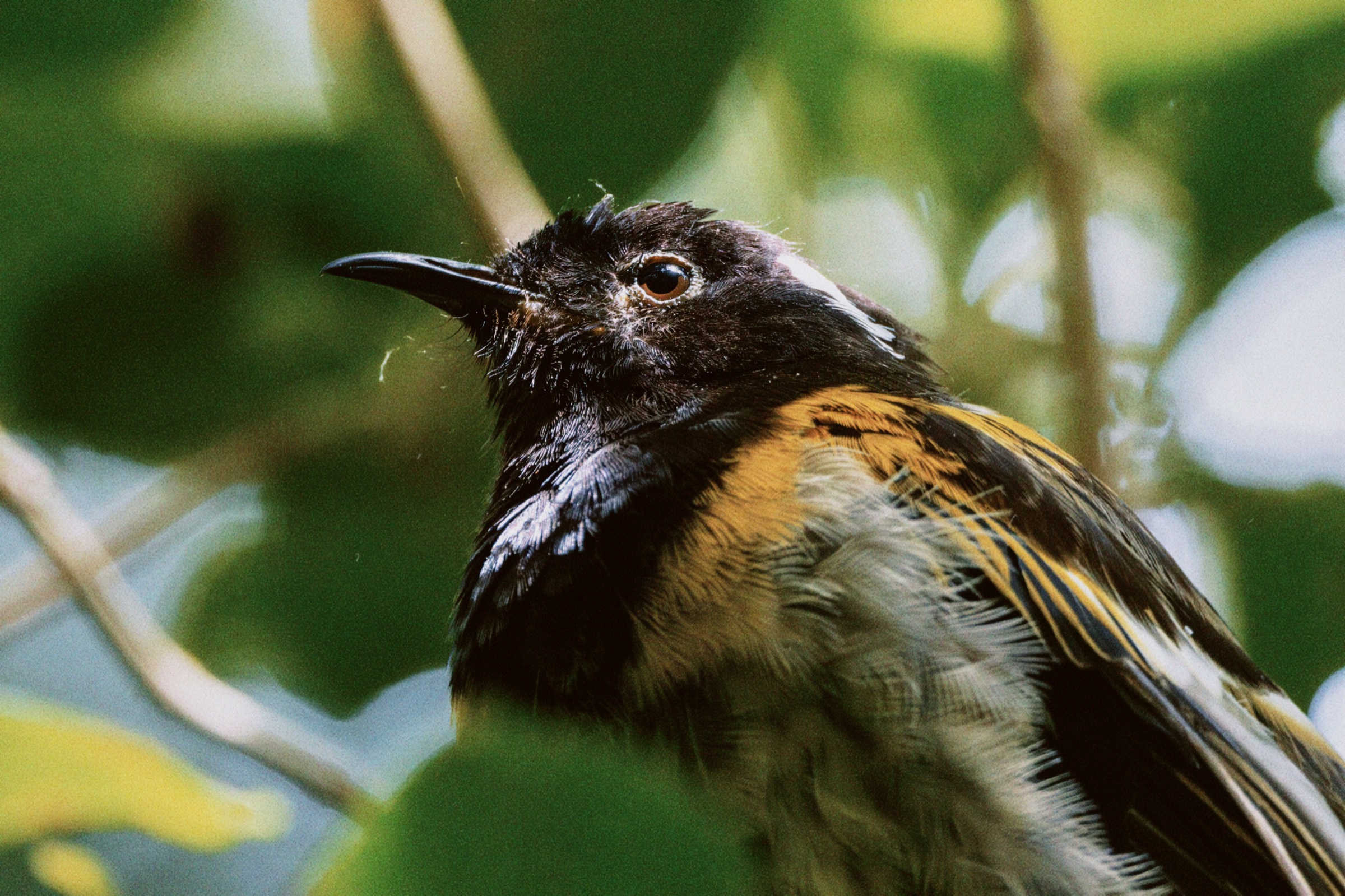
A place to slow down
Te Hāruhi is a place to take your time. The beach, open grass and pockets of bush offer different ways into birdwatching: watching the waterline, noticing movement in the trees, or simply stopping to listen.
Te Hāruhi Bay sits within Shakespear Open Sanctuary on the Whangaparāoa Peninsula. This guide is a starting point for looking around, rather than a promise of what you will see. Birds move, the light changes, and each visit has its own pace.
Begin along the shore
A beach can look quiet until you stop treating it as a way to get somewhere else. Watch where the water meets the sand and give any birds ahead of you enough room to carry on feeding or resting.
Tūturiwhatu / New Zealand dotterels and tōrea pango / variable oystercatchers breed around Te Haruhi and neighbouring Okoromai Bays. That makes the shore a place to watch carefully, especially during the nesting season. Follow signs and marked protection areas, and take a different line if birds are unsettled by your approach.
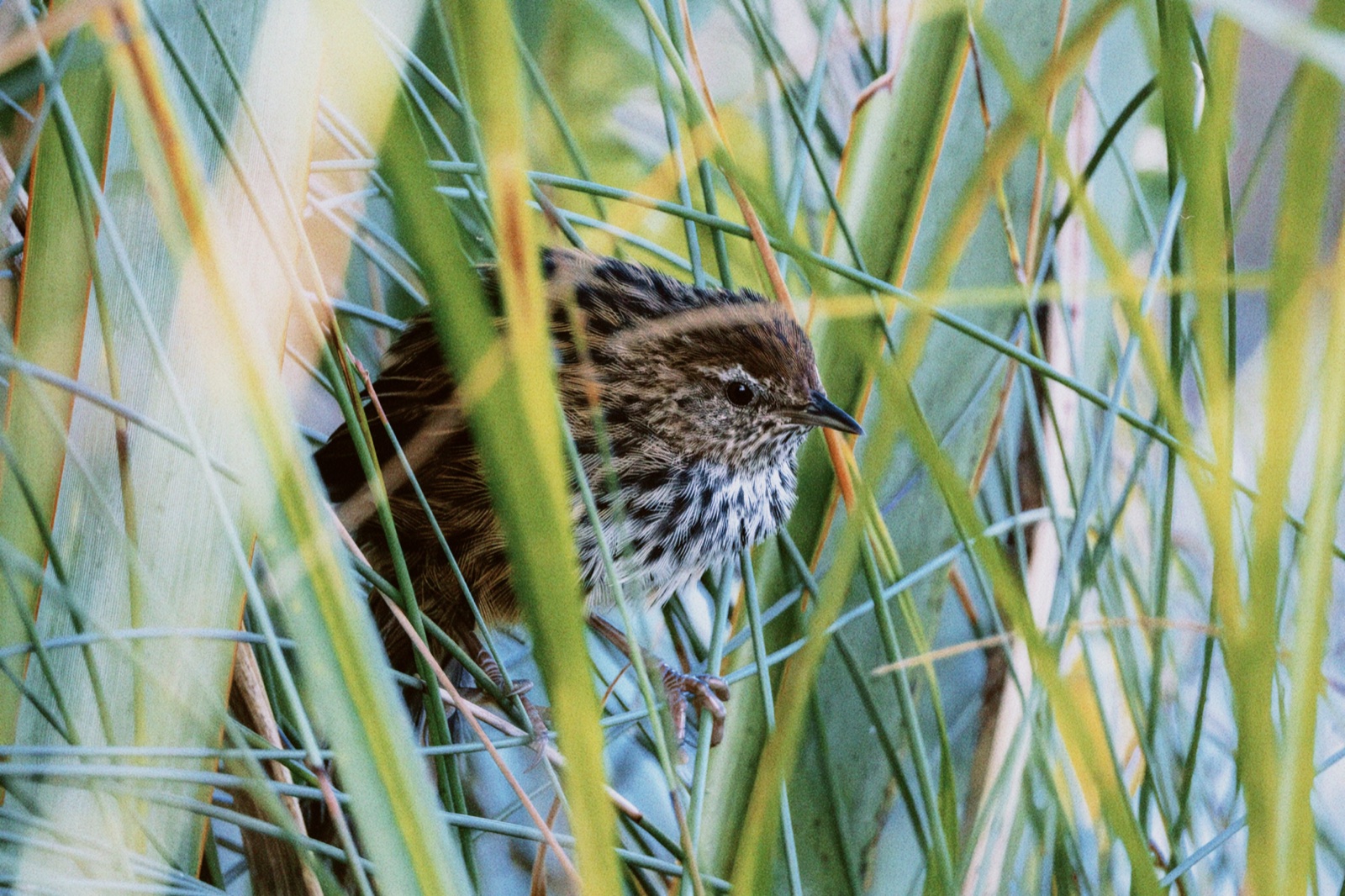
Around the wetland edges, you might also be lucky enough to glimpse a mātātā / fernbird among the vegetation. This secretive bird can be easy to miss, so take your time, stay on the track and let any encounter happen on the bird’s terms.
Notice the change in habitat
The wider sanctuary includes coastal forest, regenerating bush, wetlands and open country. Moving between these habitats changes what there is to notice: a call from cover, a bird crossing open ground, or a brief flash of colour in the canopy.
For a longer visit, the sanctuary’s own walking guidance points birdwatchers towards Waterfall Gully and Kōwhai Glen. Treat these as separate places to explore using the park map, rather than assuming they are all beside the beach.
Bird list
Native
Forest Birds
- New Zealand Pigeon (Hemiphaga novaeseelandiae)
- Tūī (Prosthemadera novaeseelandiae)
- North Island Saddleback (Philesturnus rufusater)
- Stitchbird (Notiomystis cincta)
- Whitehead (Mohoua albicilla)
- North Island Robin (Petroica longipes)
- Red-crowned Parakeet (Cyanoramphus novaezelandiae)
- Bellbird (Anthornis melanura)
- Morepork (Ninox novaeseelandiae)
- New Zealand Fantail (Rhipidura fuliginosa)
- Grey Warbler (Gerygone igata)
- Silvereye (Zosterops lateralis)
- Little Spotted Kiwi (Apteryx owenii)
- New Zealand Fernbird (Poodytes punctatus)
Wetland & Ground Birds
- Australasian Swamphen (Porphyrio melanotus)
- Paradise Shelduck (Tadorna variegata)
- Spotless Crake (Porzana tabuensis)
- Brown Teal (Anas chlorotis)
- Australasian bittern (Botaurus poiciloptilus)
- Pied Stilt (Himantopus himantopus)
- Australasian Shoveler (Spatula rhynchotis)
- Little Shag (Microcarbo melanoleucos)
Shorebirds & Coastal Birds
- Northern NZ Dotterel (Anarhynchus obscurus)
- White-fronted Tern (Sterna striata)
- White-faced Heron (Egretta novaehollandiae)
- Kelp Gull (Larus dominicanus)
- Red-billed Gull (Chroicocephalus novaehollandiae)
- Masked Lapwing (Vanellus miles)
- Variable Oystercatcher (Haematopus unicolor)
- Pied Shag (Phalacrocorax varius)
Introduced Birds
- Mallard (Anas platyrhynchos)
- Eurasian Blackbird (Turdus merula)
- Song Thrush (Turdus philomelos)
- Chaffinch (Fringilla coelebs)
- Eastern Rosella (Platycercus eximius)
- House Sparrow (Passer domesticus)
- European Greenfinch (Chloris chloris)
- Yellowhammer (Emberiza citrinella)
- Ring-necked Pheasant (Phasianus colchicus)
- Indian Peafowl (Pavo cristatus)
- Brown Quail (Synoicus ypsilophorus)
- Common Myna (Acridotheres tristis)
- European Starling (Sturnus vulgaris)
- Australian Magpie (Gymnorhina tibicen)
Make room for the birds
Bring binoculars if you have them, and use a long lens rather than moving closer for a photograph. Avoid feeding birds or using calls to draw them out. A bird staying in view is not necessarily comfortable, so keep watching its behaviour as well as its appearance.
Te Haruhi Bay is within the open sanctuary area where dogs are prohibited. Check Auckland Council’s current park information before setting out, follow biosecurity instructions and leave gates as you find the signs instruct. Stay on marked routes and take rubbish home.
Before you go
Use the current park map to choose a walk that suits your time and mobility, and check access updates before travelling. Bring water and weather protection. You do not need to cover the whole park to have a worthwhile visit: one place, watched patiently, can offer plenty.
Leave space in the visit for something you did not expect. The aim is not to collect every name. It is to notice a little more than you did when you arrived.
Further reading
Species and access information should be checked against the linked sources before a visit.